
Home / About Us
Genesis, Evolution, and March Towards Centenary
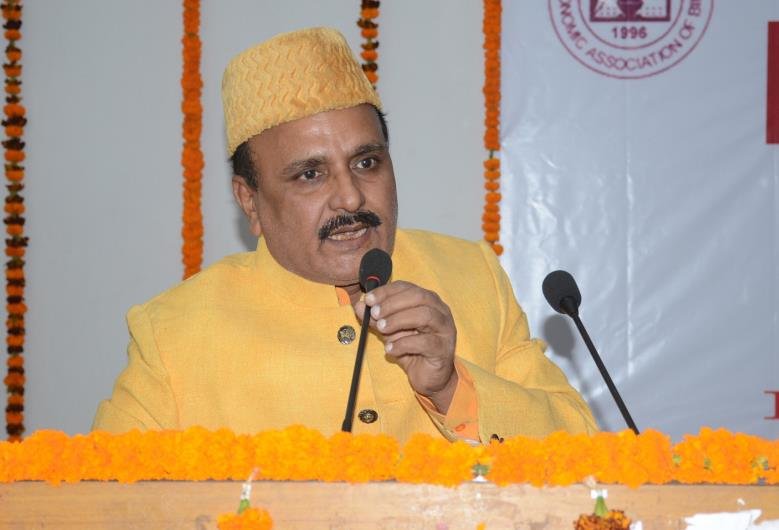
Chief Convenor, General Secretary & Senior Economist
A respected scholar and thought leader, Dr. Thakur has dedicated his career to promoting economic research, education, and collaboration across India's academic community.
The Indian Economic Association (IEA) was born out of an inspiring academic movement in 1917. It all began in Calcutta when Prof. C. J. Hamilton, a pioneering economist, convened a conclave of teachers of economics. The world was recovering from the aftermath of the First World War, and India was under the British Raj, grappling with the socio-economic effects of the Partition of Bengal (1905).
Globally, economic thought was dominated by Classical Political Economy and the Neoclassical revival led by Alfred Marshall and Arthur Pigou. Yet India lacked an institutional base to nurture its own economic scholarship.
Before the First World War, economics as a formal discipline had few roots in India. The subject was first introduced at Calcutta University and gradually spread. A small but dedicated group of educators began sensitizing students to India's economic realities and colonial challenges.
Key milestones included the appointment of Prof. C. J. Hamilton (Calcutta University, 1909) and Prof. Herbert Stanley Javons (Allahabad University, 1914) as Chairs of Political Economy. Both men laid foundations that would later strengthen India's economic community.
In December 1917, a historic gathering of economists in Calcutta led to the formation of a national body- the Indian Economic Association- to promote the study and advancement of economic science in India. Since its first annual conference in 1918, IEA has been a hub of intellectual dialogue, policy discourse, and research dissemination.
After independence, IEA’s activities expanded dramatically. With cooperation from the International Economic Association, it launched refresher courses, round tables, and monograph series to enhance economic education and analysis. Regional Economic Associations across India now regularly partner with IEA for thematic seminars and workshops.
The IEA has been privileged to have visionary leaders, including Prof. Amartya Sen, Nobel Laureate and President in 1989, and other luminaries such as R. K. Mukherjee, C. N. Vakil, D. R. Gadgil, V. K. R. V. Rao, and A. K. Dasgupta. In 2010, at the Chandigarh Conference, Dr. C. Rangarajan praised IEA's pivotal role in nurturing research excellence across India.
The objects of the Indian Economic Association are academic, and include: (a) holding of Annual Conferences; (b) publication of proceedings; (c) publication of a Journal; and (d) promoting economic science and the dissemination of information.
- Preamble, Indian Economic Association, 1918
Membership was open to teachers, students, and all those interested in economic thought, encouraging a collaborative and inclusive community from the very beginning.
Over the decades, the Association has continued to evolve, refining its objectives and expanding its reach. Former President Dr. V. R. Panchamukhi credited IEA for advancing academic standards and organizing the 8th World Congress of the International Economic Association in New Delhi.
Today, as IEA celebrates over a century of academic excellence, it remains a cornerstone of India's economic research landscape. From colonial challenges to global dialogues, the Association continues to guide economic thought towards a vision of inclusive, sustainable, and equitable growth.